Last month, one name was everywhere: Jev.
TypeSafe AI introduced it as the first “System One” model — one that doesn’t generate text at all, only returns typed decisions with calibrated probabilities. Within 24 hours, nearly 13% of paid Vercel teams had plugged it in. Then Amazon shipped Strands Decider, and Cloudflare shipped its Clef family. A brand-new box had opened, and everyone wanted a seat.
Then Perplexity walked in with Perplexity Decider V1.1 27B — a 27B open-weights model, half the price, and ahead of Jev on the very index TypeSafe created.
What’s actually happening with “decision models”?
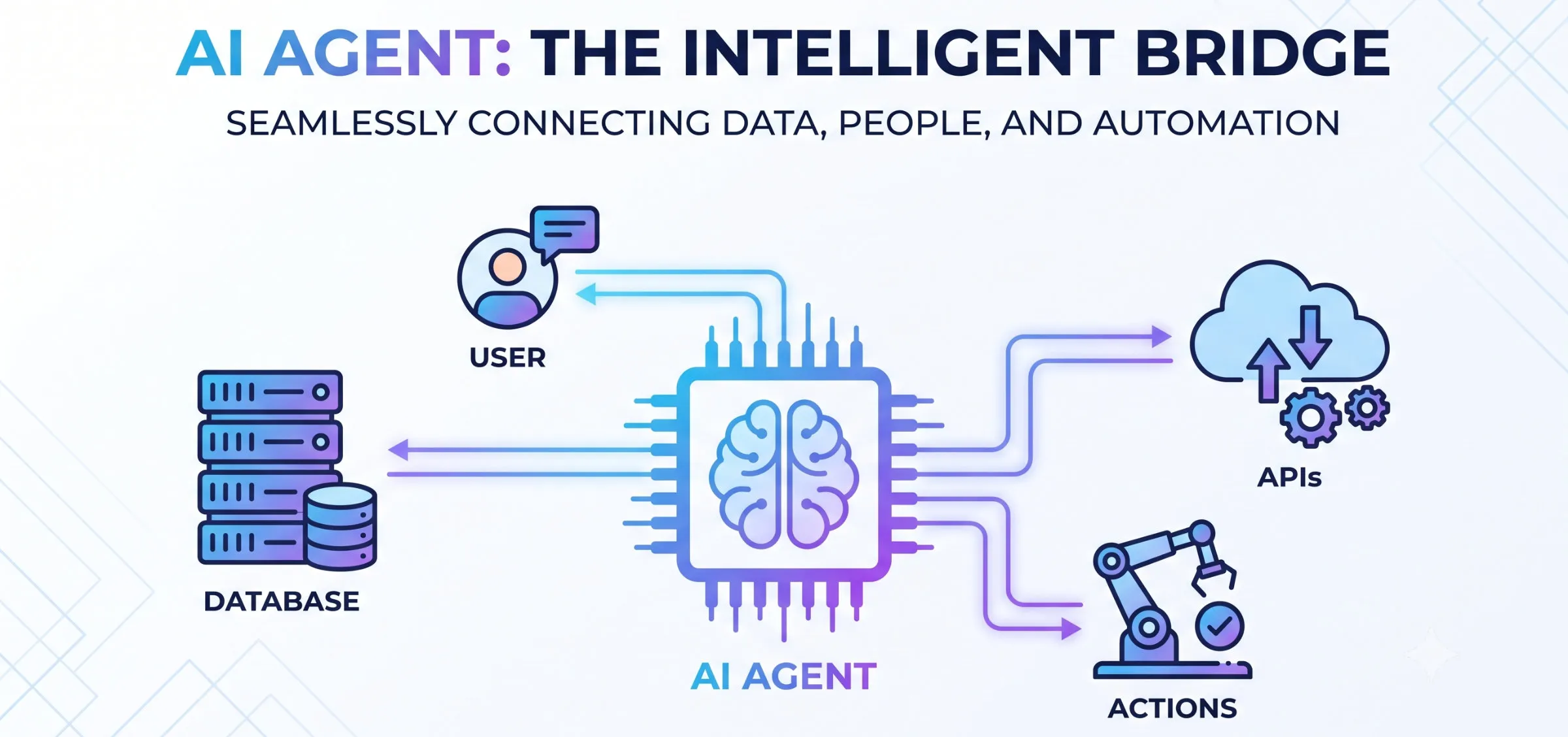
In plain terms: LLMs generate text, and decision models only make choices.
You feed in a situation plus a question that’s already boxed into a shape — pick one of a few options, place it on a graded scale, or answer yes/no. What comes back is a label with calibrated probabilities, something your software can branch on directly, with nobody parsing prose.
Sounds small. But it’s the most expensive step in almost every agent system: today, each branch point often goes to a large LLM, which you pay to write a paragraph so you can dig one label back out. Jev made the case that this job deserves its own kind of model — fast, cheap, and returning a number instead of a sentence.
That’s why the wave spread so fast.
Head to head: Jev vs Perplexity Decider V1.1 27B
| Criterion | Jev (TypeSafe) | Perplexity Decider V1.1 27B |
|---|---|---|
| Released | 2026-09-15 | 2026-10-07 |
| Input price | $0.042 / 1M token | $0.02 / 1M token |
| Output price | Free | Free |
| Context | 64K tokens | 262K tokens |
| Input | Text or JSON | Text, JSON, or image |
| Weights | Closed | Open (Apache-2.0) |
| Decision Index | 57.9 | 61.56 |
Two things jump out. First, Decider isn’t playing the “cheaper means weaker” game — it’s both half the price and accepting more input types, with four times the context. Second, and bigger: it’s open-weights, in a category whose leader is closed.
Decision Index: winning on Jev’s own turf
The Decision Index is a frozen suite of 120,340 decision tasks, originally built by TypeSafe to score Jev, then rerun publicly by the community against open reproductions.
Decider V1.1’s numbers:
| Criterion | Jev | Decider V1 | Decider V1.1 |
|---|---|---|---|
| Knowledge | 51.4 | 40.9 | 48.18 |
| Language | 62.0 | 63.5 | 69.45 |
| Retrieval | 55.4 | 54.9 | 61.26 |
| Tools | 75.1 | 79.3 | 78.88 |
| Arts | 37.7 | 39.4 | 44.66 |
| Overall Decision Index | 57.9 | 56.4 | 61.56 |
Against V1’s 56.4, the update climbs to 61.56 — about 3.6 points above Jev’s 57.9. Most of the jump comes from Retrieval, Language, and Knowledge. Tools slips a little.
Perplexity credits two changes: lifting the causal mask on the full-attention layers, and training on more data, including the tasksource collection.
Here’s where you should stay level-headed: these are Perplexity’s own published numbers, with no independent third-party evaluation yet. And the suite itself was built by a competitor. Winning on home turf is still winning, but don’t read it as a neutral ranking.
What actually matters here
Not that Decider is a few points ahead. It’s the tempo.
Jev launched in mid-September. By early October, an open model — smaller, cheaper — had passed it. Meanwhile Amazon and Cloudflare already had their own entries. An entirely new category got defined in a matter of weeks.
For people building agents, the good news is elsewhere: price. At $0.02 per million input tokens with output free, a decision step gets cheap enough to run on every request, not just the hard ones. That’s the condition that turns routing, escalation scoring, and pre-write checks into defaults instead of features you have to justify.
A few things to know before jumping in
- Don’t mix up the roles. A decision model doesn’t write. It returns a choice and a probability; the reply you send a customer still needs a different LLM.
- Defining the options matters more than the model. Vague candidate lists produce vague answers. The hard part is splitting your branches clearly.
- You set the threshold. The model hands you a number; “how sure is sure enough” belongs to your process.
- Self-hosting isn’t light. The open 27B checkpoint is on Hugging Face, but that’s roughly 49 GiB of weights at BF16 and a big GPU. Jev, for its part, is API-only with no weights. For most teams, starting on the API is the sensible move.
- The category is young. APIs, prices, and even names will keep moving. Don’t weld your architecture to a single vendor.
The tempo isn’t slowing down
An open model, half the price, passing the one that started it all — that’s the rhythm of this year, and it only just began.
If you’re wondering which part of your process is genuinely a decision — rather than an answer that needs writing — that’s already the right question. Send us a sentence and we’ll start there.